
Time Management
Urgent vs. Important Tasks
How to distinguish between urgent and important tasks
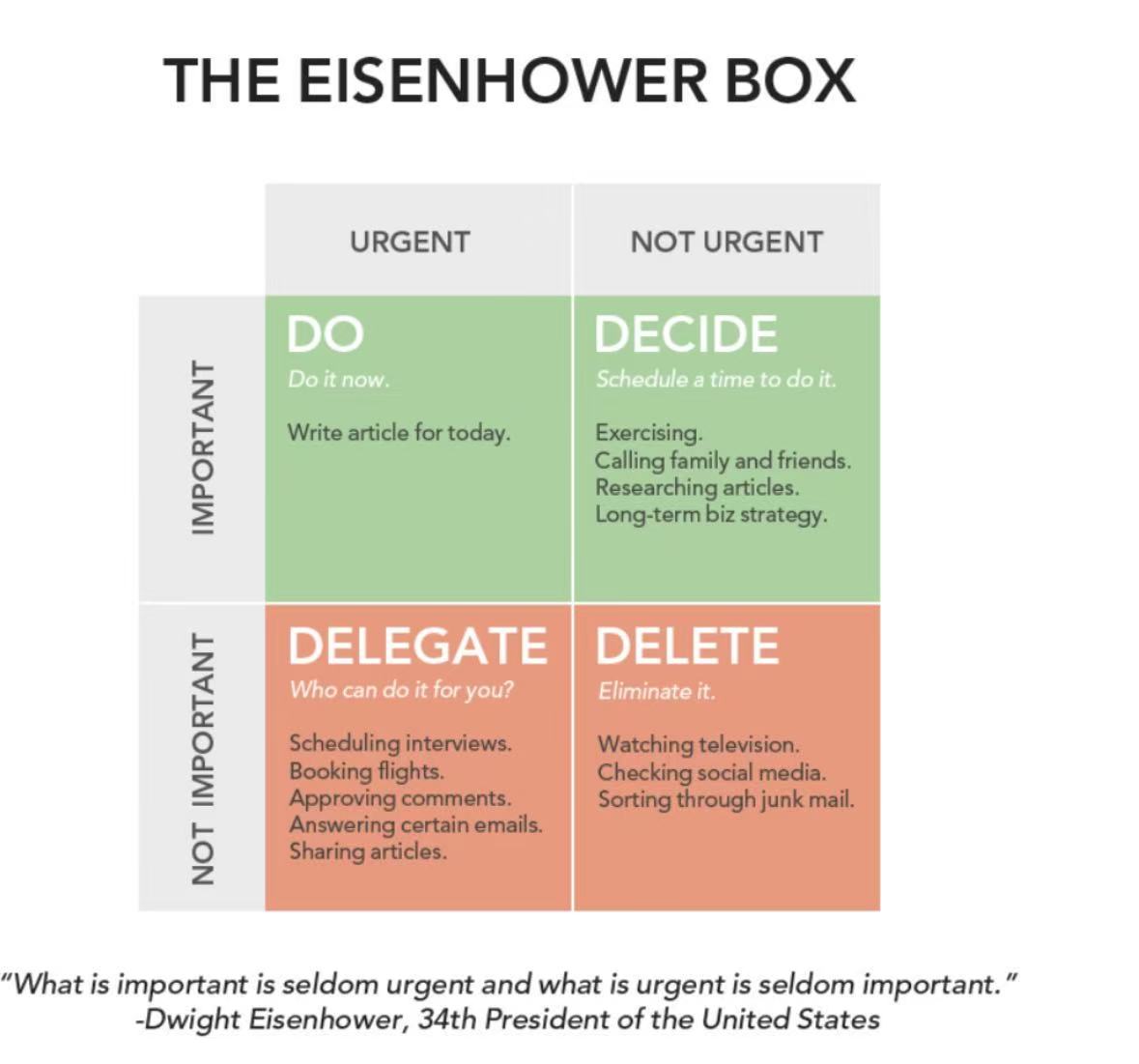
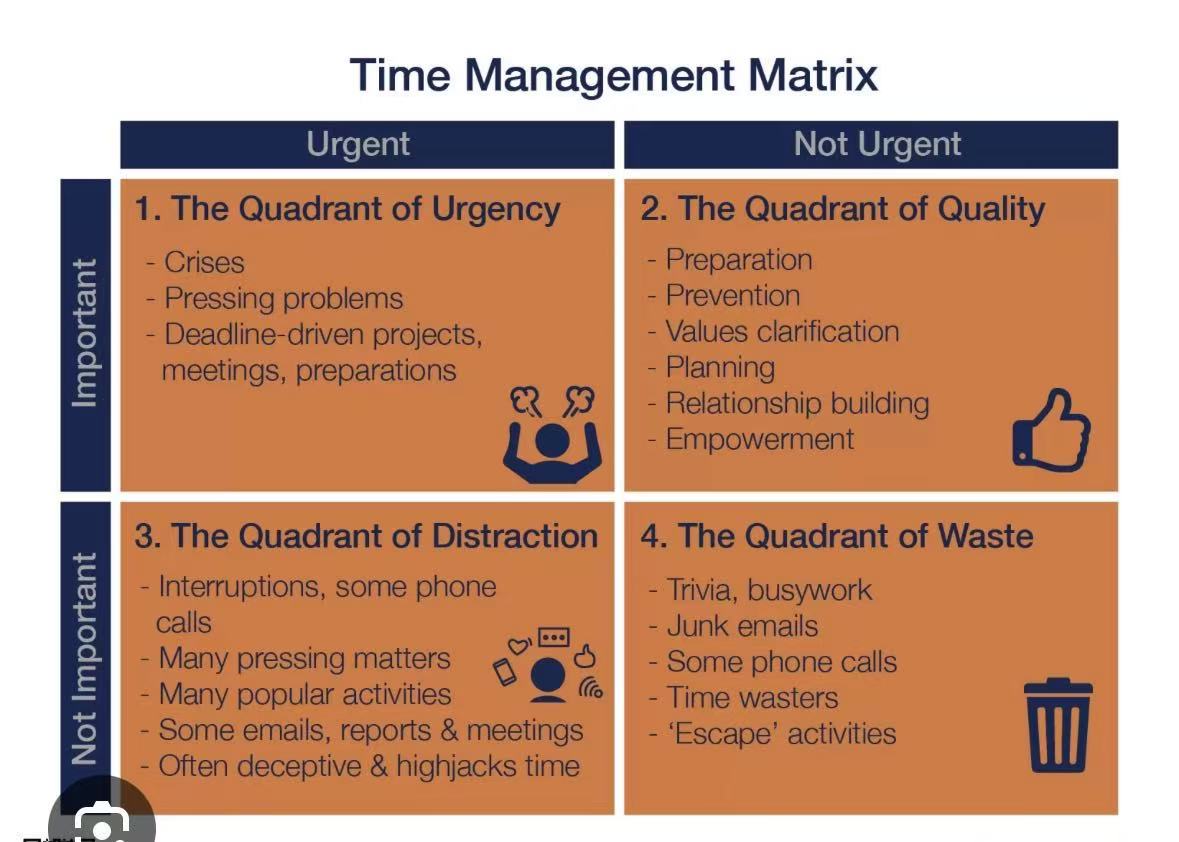
Urgent and important may seem similar, but the difference matters when using the Eisenhower Matrix. Knowing the difference can help you decide what needs your attention now and what can be planned, delegated, or removed.
Urgent tasks need immediate attention. They must be handled now, and there are clear consequences if they are not completed within a certain timeline. Delaying urgent tasks often increases stress and can contribute to burnout.
- Finishing a project with a last-minute due date
- Handling an urgent client request
- Fixing a busted pipe in your apartment
Important tasks may not require immediate attention, but they support your long-term goals. They still matter, and they usually need thoughtful planning so your time and energy are used well.
- Planning a long-term project
- Professional networking to build a client base
- Regular chores and maintenance projects
4 tips for prioritizing your tasks
1. Color-code your tasks
Color-coding can help you see priority quickly. Try assigning four colors as you review your to-do list.
- Green = highest priority items
- Yellow = second-highest priority
- Blue = third-highest priority
- Red = not a priority
Green tasks become your "do" tasks. Yellow tasks become your "schedule" tasks. Blue tasks become your "delegate" tasks. Red tasks become your "delete" tasks.
2. Limit tasks to 10 per quadrant
Even if your to-do list is long, try limiting each quadrant to 10 items. This keeps the matrix from becoming cluttered or overwhelming.
3. Make personal and professional to-do lists
Personal and professional tasks often involve different timelines, resources, and mental energy. Separate matrices can make prioritizing easier.
4. Eliminate, then prioritize
Start by removing unnecessary tasks. After clearing what does not need to be there, it is easier to decide what belongs in the do, schedule, and delegate categories.